Author: ERA-LGBTI

  • ERA Condemns Two Violent Attacks in Belgrade, Serbia

    ERA Condemns Two Violent Attacks in Belgrade, Serbia

    Not the Same. Not Unrelated.

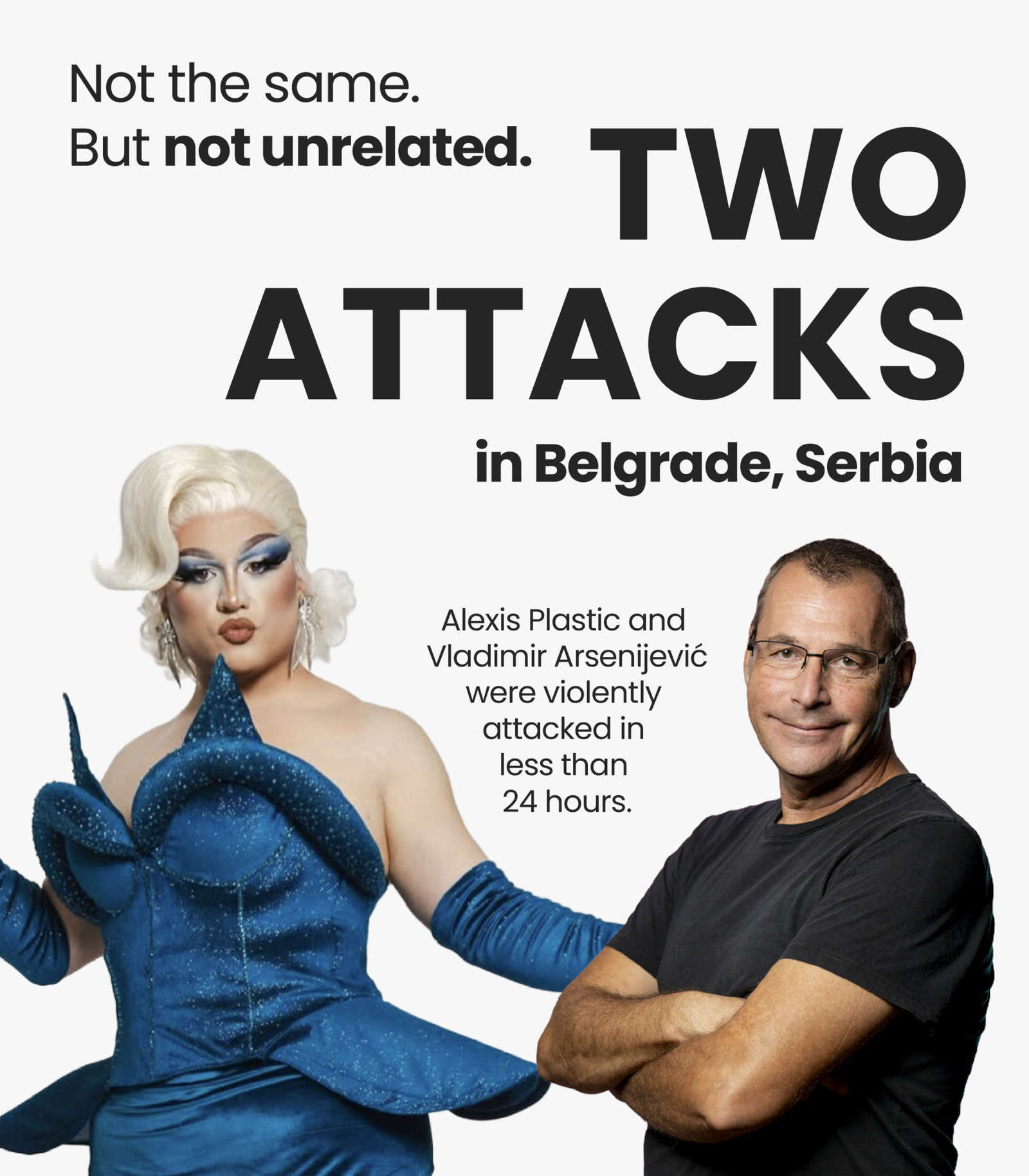
    Within less than 24 hours, drag artist Alexis Plastic and writer and KROKODIL Festival Director Vladimir Arsenijević were violently attacked in Belgrade.

    The two attacks took place in different circumstances and targeted people engaged in different areas of public and cultural life. They must not be treated as identical, nor should their individual contexts be erased. However, they are not unrelated.

    Both attacks used violence and intimidation to send a message about who is allowed to be visible, who is allowed to speak, who is considered to belong in public space and whose experiences and memories society is prepared to protect.

    Attack on Alexis Plastic

    Alexis Plastic was attacked in Belgrade’s public transport after, according to information shared about the incident, the assailant noticed an item carrying LGBTIQ+ symbols.

    During the attack, Alexis sustained an injury to the eye and a puncture wound to the leg caused by a key. The wound required surgical treatment and stitches.

    Belgrade Pride described the incident as an attack motivated by homophobia and called on the competent institutions to urgently identify and prosecute the person responsible.

    The attack is a reminder that, for many LGBTIQ+ people, visibility in public space continues to carry a real risk. An object associated with the community, a person’s appearance, gender expression or perceived identity can still become a trigger for verbal harassment, threats and physical violence.

    This is precisely how hate-motivated violence operates. Its consequences extend beyond the person who is directly attacked. It sends a warning to an entire community: hide what identifies you, make yourself less visible, avoid drawing attention and calculate whether expressing yourself openly is safe.

    No person should have to make such calculations when entering a bus, walking through the city or taking part in everyday public life.

    Attack on Vladimir Arsenijević

    Earlier that day, writer and activist Vladimir Arsenijević, founder of the KROKODIL association and KROKODIL Festival, was physically attacked beneath Branko’s Bridge in central Belgrade.

    Arsenijević was at the site to help prepare a commemoration dedicated to the victims of the Srebrenica genocide. The event had been announced as part of the programme organised by civil society organisations, foundations, artists and activists gathered around the People Remember People coalition.

    According to Arsenijević’s public account, a group of approximately 20 to 30 young people was waiting at the site. He stated that members of the group insulted, threatened, struck and kicked him, while messages were written across the space intended for the commemoration. Photographs and video published after the incident showed visible injuries to his face.

    The planned gathering was subsequently cancelled because organisers assessed that the safety of participants could no longer be guaranteed. Police conducted an examination of the scene, while institutions, diplomatic representatives and civil society actors called for a prompt investigation and prosecution of those responsible.

    Violence in this context was not only directed at one person. It disrupted a peaceful act of remembrance and made a public gathering impossible by creating fear and an immediate security risk.

    Different attacks, a connected political environment

    The attack on Alexis Plastic and the attack on Vladimir Arsenijević are not the same.

    Alexis was targeted in an incident motivated by homophobia. Vladimir was attacked while preparing a commemoration and participating in work dedicated to public remembrance.

    However, both attacks expose the consequences of a political and social environment in which certain people are repeatedly presented as undesirable, threatening or less entitled to occupy public space.

    In one case, violence communicates that an LGBTIQ+ person should not be openly visible. In the other, violence communicates that people should not publicly challenge denial, insist on remembrance or create space for difficult conversations about the past.

    In both cases, fear is used as a political tool.

    The objective is larger than injuring one person. It is to influence the behaviour of everyone watching: to discourage LGBTIQ+ people from expressing themselves openly, activists from organising, artists and writers from speaking publicly, and citizens from participating in acts of remembrance or defending human rights.

    These are not abstract debates, isolated acts of offensive speech or individual conflicts. When hatred is normalised, when threats remain without consequences and when those who use violence expect impunity, physical attacks become increasingly likely.

    Across the Western Balkans, homophobia, transphobia, historical revisionism, nationalist intimidation and hostility towards human rights defenders often reinforce one another.

    They draw from the same politics of exclusion: dividing society into those who supposedly belong and those who do not; constructing internal enemies; controlling which identities may appear in public; and treating people who question dominant nationalist and patriarchal narratives as legitimate targets.

    This is why ERA, as a regional LGBTIQ+ organisation, cannot understand the safety of LGBTIQ+ people as an isolated issue.

    LGBTIQ+ rights cannot be separated from democratic freedoms, the protection of civic space, freedom of expression and the right of citizens to organise, remember and defend human rights without fear.

    A society that tolerates violence against one group does not become safer for others. It simply expands the number of people against whom violence may eventually be used.

    Institutional responsibility requires action

    ERA strongly condemns both attacks and stands in solidarity with Alexis Plastic and Vladimir Arsenijević.

    We call on the Serbian authorities to act without delay: to identify and prosecute all those responsible, fully investigate the motives and circumstances of both attacks and ensure the safety of those targeted.

    The investigations must address not only the immediate acts of violence but also whether the attacks were motivated by hatred, organised intimidation or an intention to prevent people from participating freely in public life.

    Institutional responsibility cannot be reduced to statements of condemnation issued after someone has already been injured or a public event has already been forced to close.

    It requires effective protection, swift and transparent investigations, consistent prosecution and a clear response to the wider climate in which homophobia, transphobia, nationalist intimidation and hostility towards human rights defenders are increasingly normalised.

    Failure to respond decisively does not leave the situation unchanged. It communicates that threats may be effective, that violence can successfully remove people and ideas from public space, and that those who attack may expect few or no consequences.

    Public authorities have an obligation to protect every citizen equally, regardless of their actual or perceived sexual orientation, gender identity, gender expression, political position, profession or public engagement.

    They also have an obligation to ensure that public transport, streets, cultural venues and spaces of peaceful assembly remain accessible and safe for everyone.

    Freedom cannot be selective!

    There can be no meaningful safety for LGBTIQ+ people in a society where hatred, violence and impunity are allowed to decide who belongs, who may speak and who may be remembered.

    Belgrade, and every city across our region, must be a place where people can live openly, express themselves, participate in public and cultural life, preserve memory and defend human rights without fear of violence.

    Solidarity is more than standing beside those who have already been attacked.

    It is our collective refusal to allow violence to determine the boundaries of our freedoms.
  • ERA’s Regional Input Referenced in Landmark UN Report on Violence and Discrimination against LBQ* Women

    ERA’s Regional Input Referenced in Landmark UN Report on Violence and Discrimination against LBQ* Women

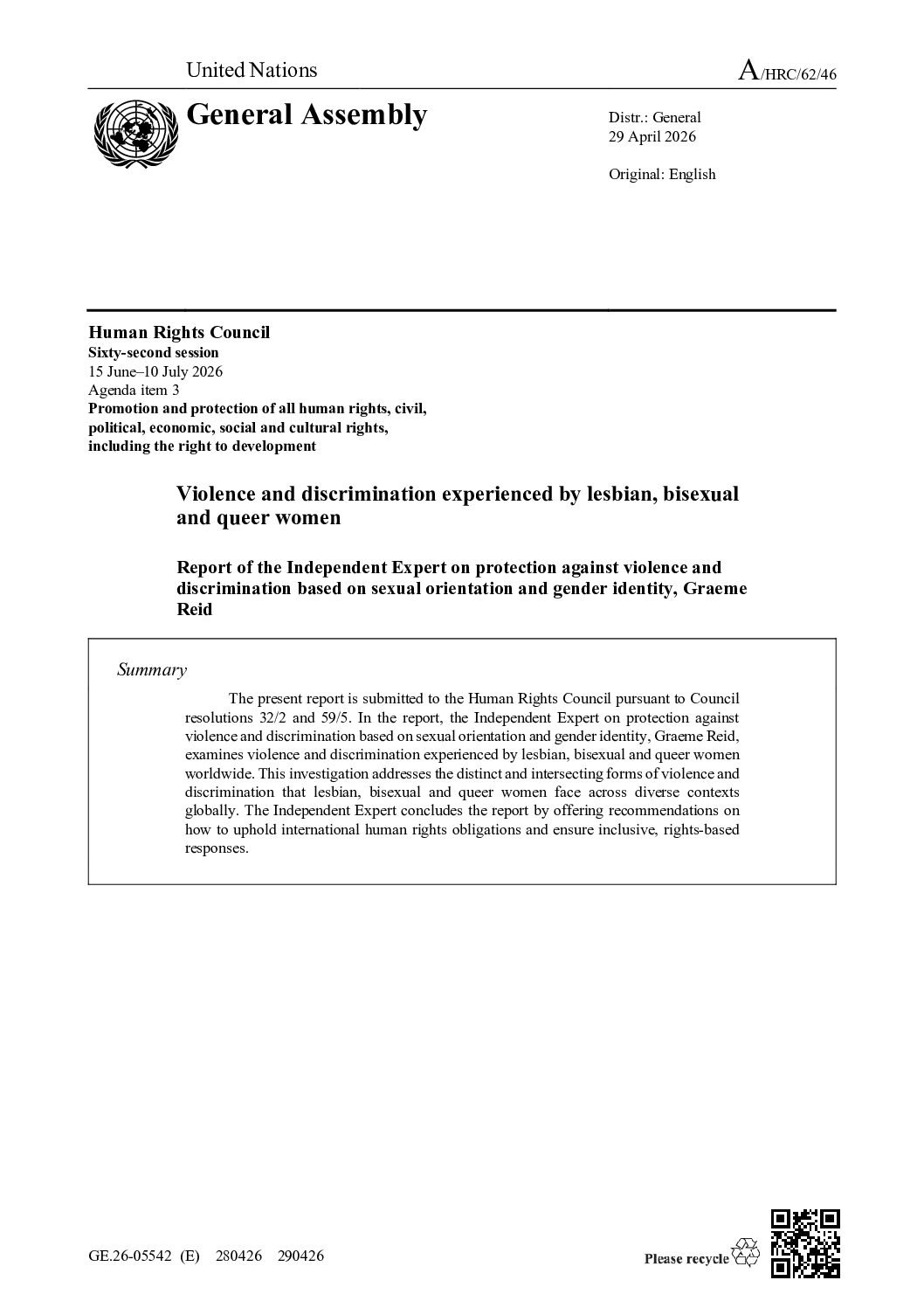
    ERA’s regional input on gender-based violence against LBQ women has been accepted, integrated and referenced in the latest report of the UN Independent Expert on protection against violence and discrimination based on sexual orientation and gender identity, Graeme Reid.

    The report, titled “Violence and discrimination experienced by lesbian, bisexual and queer women,” was submitted to the 62nd session of the UN Human Rights Council and represents a landmark contribution to documenting the distinct and intersecting forms of violence, discrimination and structural exclusion faced by LBQ women worldwide.

    ERA’s input, prepared through the Women Loving Women Caucus, contributed regional evidence from the Western Balkans and Slovenia to the global analysis. The submission is referenced in key sections of the report addressing access to healthcare, gender-based violence services, and the structural data gaps that continue to make violence against LBQ women invisible in policies, institutions and official statistics.

    The report underlines that LBQ women often remain absent from both women’s rights frameworks and broader LGBTIQ+ policy responses. Their experiences of violence are frequently minimized, misclassified or treated as private matters, while protection systems often fail to recognize violence within same-sex relationships or the specific risks faced by lesbian, bisexual and queer women.

    For ERA, this recognition is an important confirmation of the relevance of community-based knowledge, regional cooperation and long-term advocacy led by LBQ women and activists from the region. It also strengthens the need for better data, inclusive protection services, trained institutions and policies that address the lived realities of LBQ women.

    “This is an extremely important moment for us. The regional input on gender-based violence against LBQ women from our region has become part of the global evidence base. As lesbians, activists, experts and as part of ERA, we are proud that our work has contributed to this historic report,” said Elena Petrovska, ERA’s Project and Advocacy Coordinator.

    The report calls on States to recognize violence against LBQ women as gender-based violence, ensure inclusive shelters and protection services, collect disaggregated data, remove barriers to healthcare and guarantee that LBQ women can access justice, safety and public life without discrimination.

    ERA will continue working with its members, partners and the Women Loving Women Caucus to document the realities of LBQ women in the Western Balkans and Türkiye, strengthen institutional responses and ensure that LBQ women’s experiences are no longer pushed to the margins of policy, protection and public debate.

    Read the full report here.

  • ERA Joins Grant Agreement Signing Ceremony and Capacity Building in Podgorica

    ERA Joins Grant Agreement Signing Ceremony and Capacity Building in Podgorica

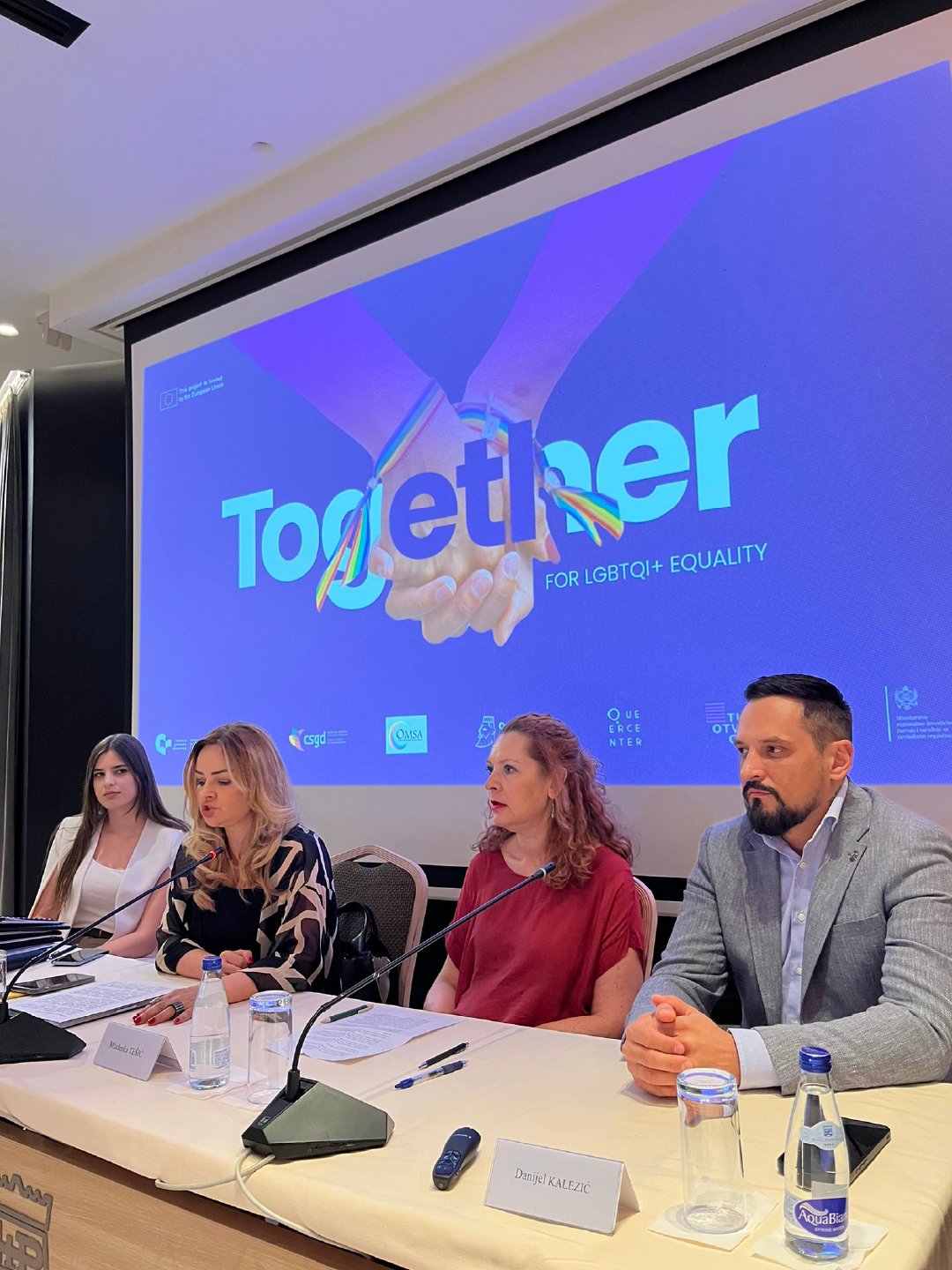
    ERA joined partners, subgrantees and organisations from across the region in Podgorica for the Grant Agreement Signing Ceremony and Capacity Building for Management and Advocacy, organised within the programme Together for LGBTQI+ Equality.

    The event brought together project partners and supported organisations from Bosnia and Herzegovina, Montenegro, North Macedonia, Serbia and Kosovo, marking an important step in strengthening locally driven initiatives, regional cooperation and the long-term sustainability of the LGBTIQ+ movement.

    Danijel Kalezić, ERA’s Executive Co-Director, delivered opening remarks and joined Daliborka Uljarević, Executive Director of the Centre for Civic Education, and Mladenka Tešić, Programme Manager at the Delegation of the European Union to Montenegro, at the official grant agreement signing ceremony.

    Grant agreements were signed with 19 organisations from the region, with total support amounting to EUR 306,645.41. The supported initiatives address the needs of LGBTIQ+ communities through legal support, visibility, youth work, research, advocacy and public policy development.

    As part of the programme activities, project partners also held a coordination meeting to review implementation and discuss next steps. ERA was represented by Danijel Kalezić and Elena Petrovska, Project Coordinator.

    During the capacity building, representatives of supported organisations strengthened their skills in project management, reporting, EU visibility, procurement, VAT regulations and advocacy. The training also provided space for organisations to exchange experiences, share challenges and build stronger regional connections.

    As a project partner, ERA is proud to contribute to a programme that supports community-based work, strengthens organisational capacities and creates more space for coordinated action toward equality.

    The programme Together for LGBTQI+ Equality is implemented by the Centre for Civic Education in partnership with ERA – LGBTI Equal Rights Association for Western Balkans and Türkiye, Queer Montenegro, Queer Center, Tuzla Open Center, Open Mind Spectrum Albania and the Center for Social Group Development from Kosovo.

    The programme is funded by the European Union and co-funded by the Ministry of Human and Minority Rights of Montenegro.

  • ERA Participates in the Council of Europe’s No Hate Speech Week in Strasbourg

    ERA Participates in the Council of Europe’s No Hate Speech Week in Strasbourg

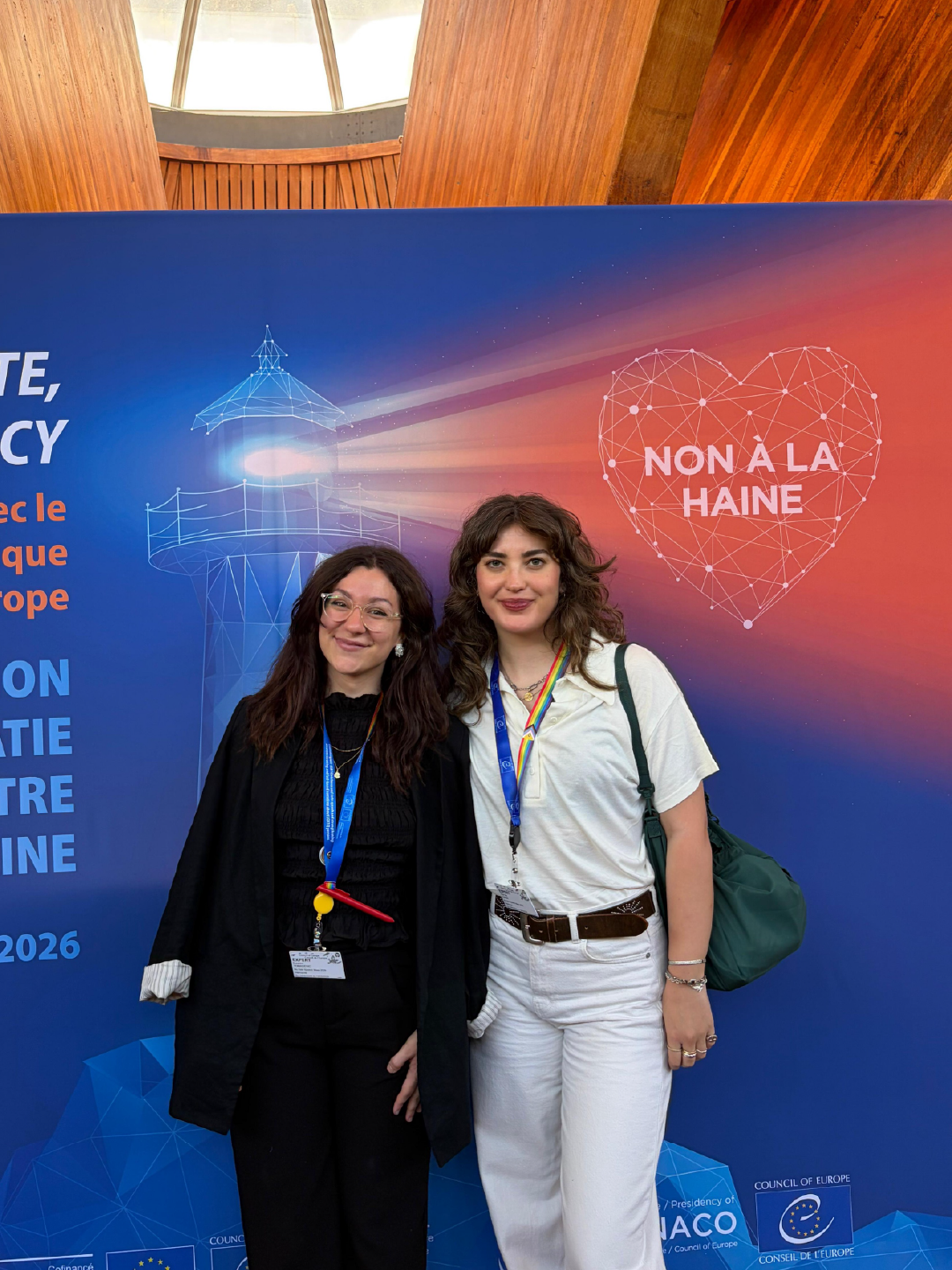
    During the Council of Europe’s No Hate Speech Week in Strasbourg, Buğu Sıla Evren, ERA’s Project and Research Coordinator, followed discussions on some of the most urgent questions related to hate speech, discrimination and democratic resilience today.

    The programme examined the root causes of racism and intolerance, gender-based and anti-LGBTI hate, the role of equality bodies and reporting mechanisms, as well as the opportunities and risks of using artificial intelligence to address harmful online content.

    Participants reflected on how to respond more effectively to hate speech and hate-motivated violence targeting communities already exposed to discrimination, including LGBTIQ+ people and women. Discussions also addressed how institutions, civil society and digital platforms can keep pace with rapidly changing online spaces and harmful narratives that are constantly reproduced, adapted and amplified.

    These questions are especially important in contexts where institutions remain weak, laws are inconsistently implemented, and people affected by hate often do not trust reporting mechanisms or expect an effective response.

    Hate speech has a profound impact on the dignity and human rights of individuals and communities. It weakens trust, limits participation and undermines democratic resilience. It also shapes public opinion, normalises prejudice and influences how societies understand and respond to marginalised groups.

    Countering hate speech cannot rely only on removing content or sanctioning individual cases. It requires prevention, education, long-term monitoring, stronger institutions, meaningful implementation of laws and a deeper understanding of the conditions that allow hate to spread.

    At ERA, we remain committed to better understanding the trends, root causes and evolving forms of hate speech, and to identifying more effective, evidence-based and rights-based ways to prevent and address it.

    During the Networking Fair, Buğu Sıla Evren also presented ERA’s ongoing monitoring of online hate speech in Bosnia and Herzegovina, Montenegro, North Macedonia and Serbia. 

    ERA was glad to take part in No Hate Speech Week, learn from different perspectives and bring this knowledge back into its regional work across the Western Balkans and Türkiye. 

  • ERA, Stana and Queer Montenegro Address Violence Against LBTIQ Women at Joint Event in Podgorica

    ERA, Stana and Queer Montenegro Address Violence Against LBTIQ Women at Joint Event in Podgorica

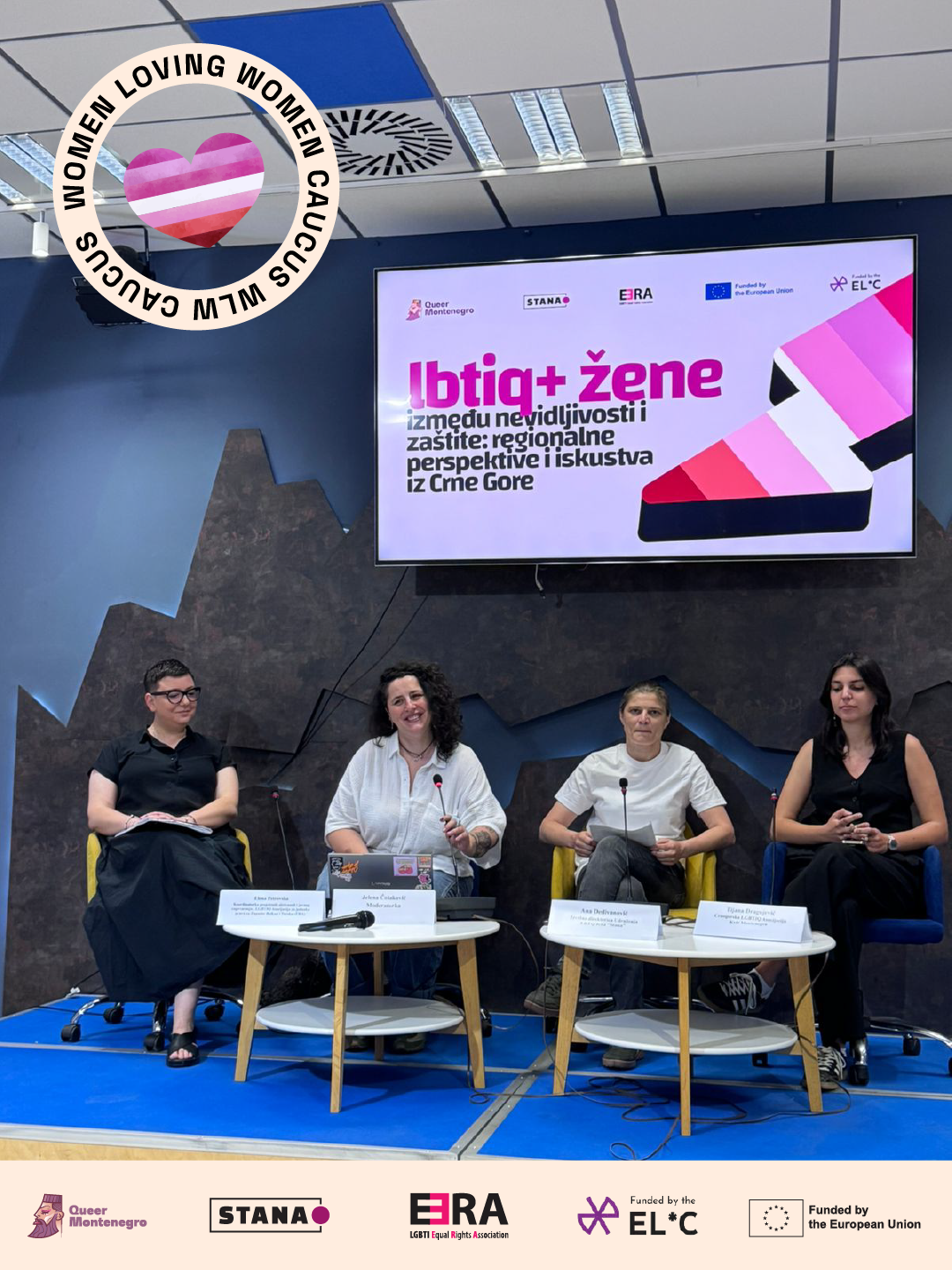
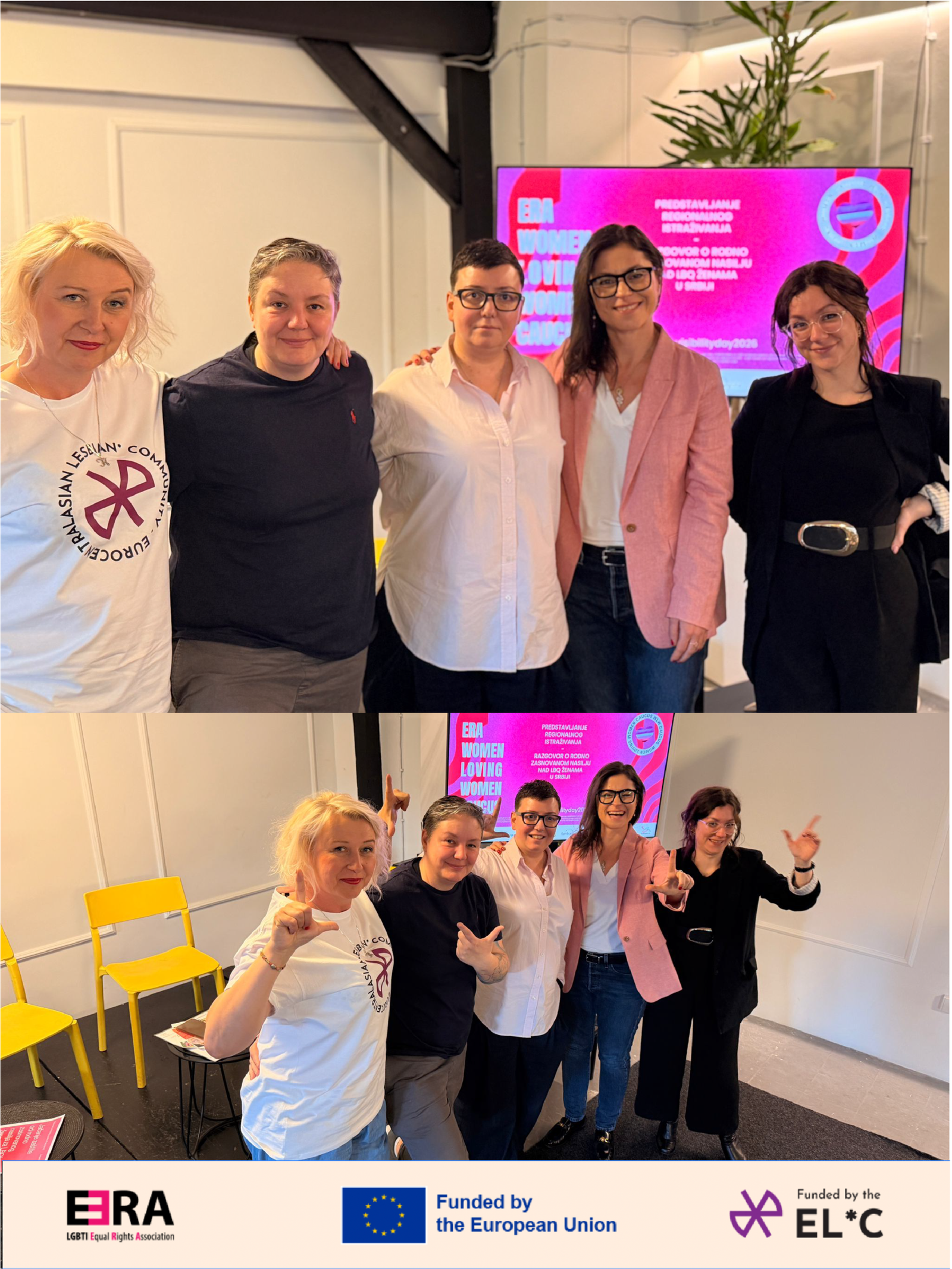
    The conference “LBTIQ Women between Invisibility and Protection: Regional Perspectives and Experiences from Montenegro” opened in Podgorica, bringing together community representatives, civil society organisations and key stakeholders to discuss violence against LBTIQ women, institutional mistrust and the urgent need for real, accessible and non-discriminatory protection.

    The event was opened by Ana Dedivanović, Executive Director of the LBTQ Women’s Association Stana, and Tijana Dragojević, Project Coordinator at Queer Montenegro. In their opening remarks, they centred the realities of LBTIQ women who have remained invisible for too long, while continuing to exist, love, build community and resist.

    Jelena Čolaković presented the local research findings, showing that violence against LBTIQ women is often not limited to isolated incidents, but forms a continuum. This includes psychological pressure, verbal abuse, family rejection, threats of outing, digital harassment, control within relationships and mistrust in institutions.

    One of the key findings presented during the conference was particularly clear: although 64% of respondents know where they could report violence, 80% have never reported it. This gap points to the need to move beyond the formal availability of protection mechanisms and ensure that institutions are trusted, accessible and able to respond without discrimination.

    Bringing the regional perspective, Elena Petrovska, Project and Advocacy Coordinator at ERA and WLW Caucus Coordinator, underlined the importance of moving from research and data towards concrete protection.

    “This dialogue is an important step from data to protection. We are here to work closely with institutions, policy makers and local organisations so that laws, services and referral pathways recognise LBTIQ survivors and protect them without discrimination. We now have solid evidence about how violence affects LBTIQ women across the region. What we need is cooperation so that these realities are recognised in policies, protocols and services,” said Petrovska.

    The conference created space for a public dialogue on how institutions, civil society organisations and decision-makers can better recognise the specific forms of violence experienced by LBTIQ women and ensure that protection systems respond to their needs in practice.

    This activity was part of the projects “Invisible Survivors,” “We Exist, We Resist,” and “From Data to Protection – Improving Cooperation among Key Actors in the Field of Gender-Based Violence against LBQ Women in the Western Balkans,” funded by the EuroCentralAsian Lesbian* Community network and the European Union.

    The content is the sole responsibility of the LBTQ Women’s Association Stana, LGBTIQ Association Queer Montenegro, and ERA – LGBTI Equal Rights Association for the Western Balkans and Türkiye, which implement the projects, and does not necessarily reflect the views of donors.

  • ERA Joins Pride Week Novi Sad for the Presentation of the Serbian Working Safe Policy Paper

    ERA Joins Pride Week Novi Sad for the Presentation of the Serbian Working Safe Policy Paper

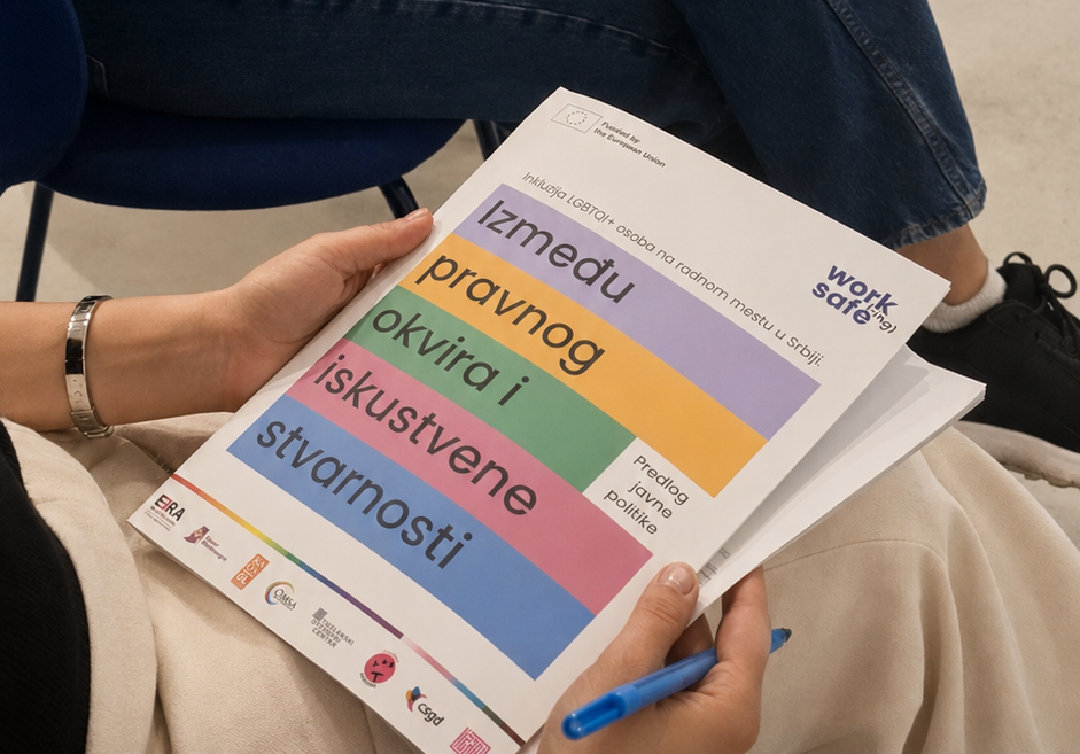
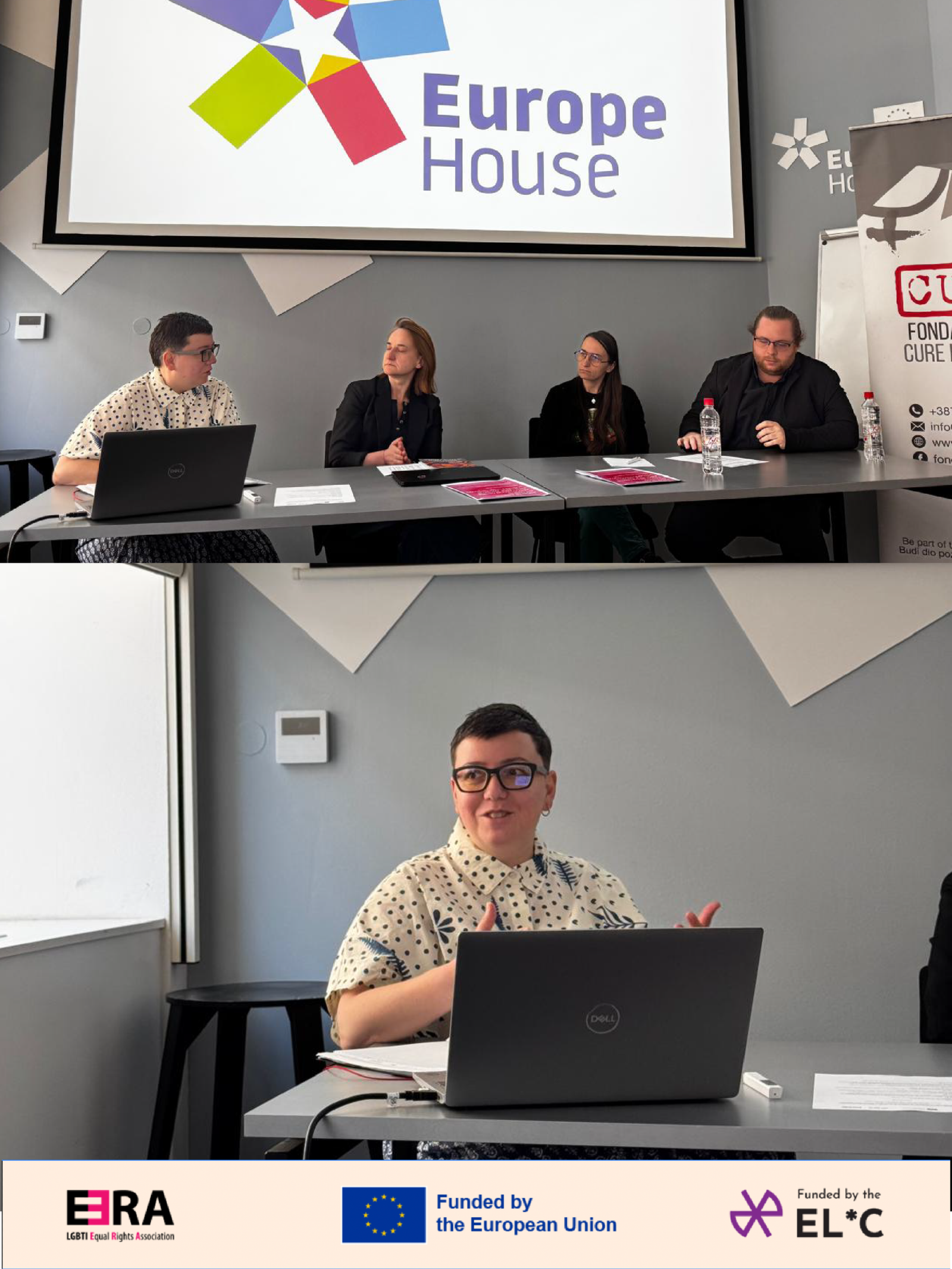
    As part of Pride Week in Novi Sad, ERA joined Group Come Out, its Working Safe project partner and Pride Week organiser, for the presentation of the Serbian national policy paper on the socio-economic inclusion of LGBTQI+ communities.

    The Serbian policy paper is one of seven country-specific policy papers developed across the Western Balkans and Türkiye within the Working Safe project. Together, the papers provide evidence-based analysis, community insights and recommendations addressing the barriers faced by LGBTQI+ people in employment, workplaces and broader socio-economic participation.

    During the event, Buğu Sıla Evren, ERA’s Project and Research Coordinator, presented the Working Safe project, the upcoming regional research report, the national policy papers and the research process behind them. She reflected on the challenges, gaps, institutional responses and lived realities that shaped the findings.

    As highlighted during the presentation:

    “Work is not only a source of income. It shapes people’s security, wellbeing, mental health, and ability to participate fully in society.”

    “For many LGBTQI+ people across the region, workplaces are still spaces where they feel pressure to hide who they are.”

    The discussion underlined that laws alone are not enough. Even where legal protections exist, many workplaces still lack trust, effective reporting mechanisms, accountability and real implementation.

    Across the region, similar patterns continue to emerge, including fear of reporting discrimination, limited trust in institutions, weak implementation of existing protections and insufficient awareness of discrimination in the workplace. These shared challenges show why regional cooperation, evidence-based advocacy and sustained institutional engagement remain essential.

    Creating safe and equal workplaces requires coordinated action by institutions, employers, trade unions, chambers of commerce, civil society organisations, media, international partners and all stakeholders working on equality, labor rights and social inclusion.

    Read policy paper on Socio-economic Inclusion of LGBTQI+ community in Serbia here: Inclusion of LGBTQI+ Persons in the Workplace in Serbia: Between the Legal Framework and Lived Reality

    Interested in other countries? Explore other 6 related policy papers on link below, available in English and its respective local language for other countries: Albania, Bosnia and Herzegovina, Kosovo, Montenegro, North Macedonia, Türkiye.

    The project Working Safe: Socio-economic Inclusion of the LGBTQI+ Community in the Western Balkans and Türkiye is implemented by ERA-LGBTI Equal Rights Association for Western Balkans and Türkiye, in partnership with Queer Montenegro, Tuzla Open Center from Bosnia and Herzegovina, Open Mind Spectrum Albania, Center for Social Group Development from Kosovo, Coalition Margins from North Macedonia, Group Come Out from Serbia and Kaos GL from Türkiye.

    This project is funded by the European Union. Its contents are the sole responsibility of ERA or implementing partner and do not necessarily reflect the views of the European Union.

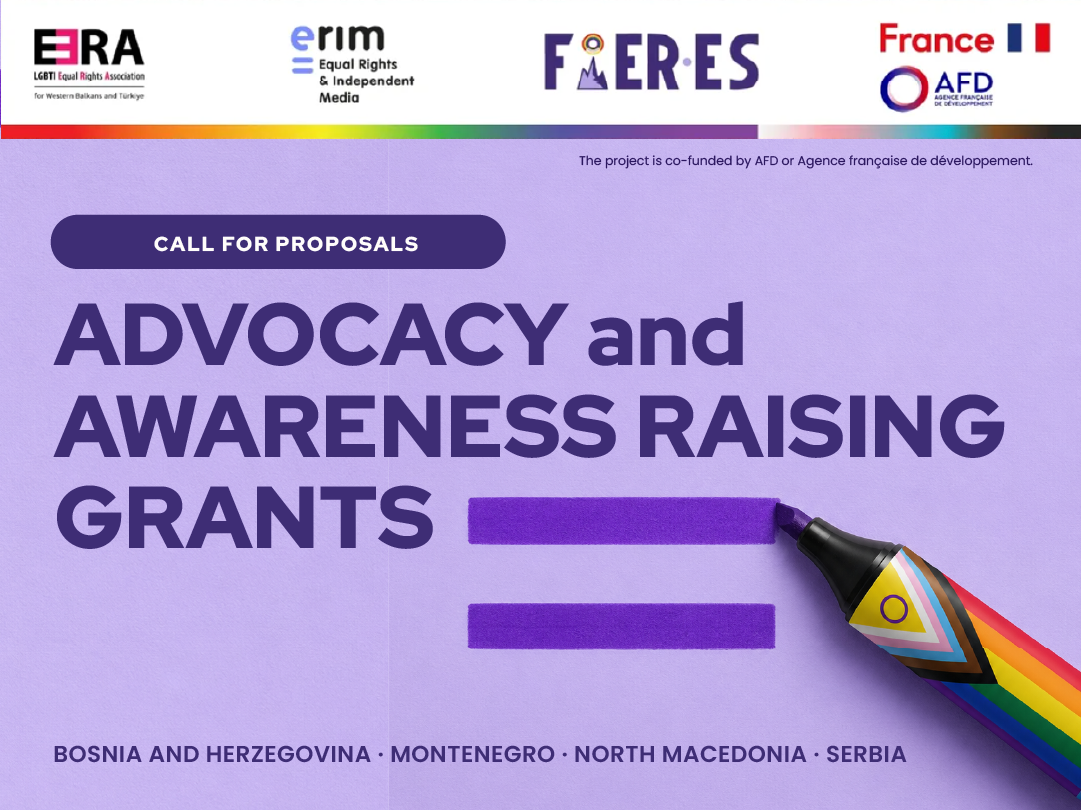
  • Call for Proposals

    We open the Call for Proposals for the support to projects of civil society organisations (CSO) in Western Balkans and Türkiye

    Project proposals should promote and support the social inclusion and fundamental rights of LGBTQI+ persons in all spheres of public and private life. The objective of this call is to support local initiatives that advance equality and empower LGBTQI+ communities, by strengthening the role and capacities of LGBTQI+-led civil society.

    The overall aim is to contribute to further socio-economic inclusion of the LGBTQI+ community and participation in the public sphere in the Western Balkans and Türkiye. The objective is to strengthen the civil society organizations’ role and capacities to advocate, deliver services, raise public awareness and/or provide other types of support to the LGBTQI+ population in pursuing their rights and equal opportunities.

    Project proposal shall be submitted no later than 2 November 2025, 17:00 (CET).

    In order to be eligible for a grant, the lead applicant must fulfil criteria as follows:
    • Be a legal person;
    • Be non-profit-making;
    • Be a civil society organisation (CSO) or a representative network of CSOs working on
    one or more thematic areas of relevance to this Call for Proposals

    • be established in an IPA III Beneficiary under the Instrument of Pre-accession Assistance – the IPA III Beneficiaries taken into consideration for the present call for proposals are: The Republic of Albania, Bosnia and Herzegovina, Kosovo, Montenegro, The Republic of North Macedonia, The Republic of Serbia, The Republic of Türkiye
    • be directly responsible for the preparation and management of the action with their possible co-applicant(s) and affiliated entity(ies), not acting as an intermediary and
    • have as a minimum two years (i.e. 24 months) experience in the field of the Call. In case the lead applicant is a network of CSOs, this applies also to its members and

    Applications must be submitted with filled: Application Form (Annex I) Budget Proposals (Annex II) and Logical Framework Matrix (Annex III).

    Please read carefully detailed Guidelines prior to filling in these forms.

    A comprehensive capacity-building programme in project management and related issues will be provided to supported CSOs.

    Applications, along with the accompanying technical documentation, shall be sent to e-mail grants@old.lgbti-era.org, with subject “CfP for CSOs in WB and TR – Working Safe”. If needed, further information can be obtained by sending the question to grants@old.lgbti-era.org no later than 12 October 2025 17:00.

    A total of EUR 400,000 will be allocated to CSOs through this call. The amount of funds that can be allocated for an individual project under this Call can be a maximum of EUR 40,000.

    The project Working Safe: Socio-economic Inclusion of the LGBTQI+ Community in the Western Balkans and Türkiye, which is implemented by ERA – LGBTI Equal Rights Association for Western Balkans and Türkiye, in partnership with Queer Montenegro, Tuzla Open Center from BiH, Open Mind Spectrum Albania, Center for Social Group Development from Kosovo, Coalition Margins from North Macedonia, Izađi from Serbia and Kaos GL from Türkiye. This project is funded by the European Union.

    This call was produced with the assistance of the European Union. Its contents are the sole responsibility of the implementing organisation and do not necessarily reflect the views of the European Union.