Geographic Area: Montenegro

  • ERA’s Regional Input Referenced in Landmark UN Report on Violence and Discrimination against LBQ* Women

    ERA’s Regional Input Referenced in Landmark UN Report on Violence and Discrimination against LBQ* Women

    ERA’s regional input on gender-based violence against LBQ women has been accepted, integrated and referenced in the latest report of the UN Independent Expert on protection against violence and discrimination based on sexual orientation and gender identity, Graeme Reid.

    The report, titled “Violence and discrimination experienced by lesbian, bisexual and queer women,” was submitted to the 62nd session of the UN Human Rights Council and represents a landmark contribution to documenting the distinct and intersecting forms of violence, discrimination and structural exclusion faced by LBQ women worldwide.

    ERA’s input, prepared through the Women Loving Women Caucus, contributed regional evidence from the Western Balkans and Slovenia to the global analysis. The submission is referenced in key sections of the report addressing access to healthcare, gender-based violence services, and the structural data gaps that continue to make violence against LBQ women invisible in policies, institutions and official statistics.

    The report underlines that LBQ women often remain absent from both women’s rights frameworks and broader LGBTIQ+ policy responses. Their experiences of violence are frequently minimized, misclassified or treated as private matters, while protection systems often fail to recognize violence within same-sex relationships or the specific risks faced by lesbian, bisexual and queer women.

    For ERA, this recognition is an important confirmation of the relevance of community-based knowledge, regional cooperation and long-term advocacy led by LBQ women and activists from the region. It also strengthens the need for better data, inclusive protection services, trained institutions and policies that address the lived realities of LBQ women.

    “This is an extremely important moment for us. The regional input on gender-based violence against LBQ women from our region has become part of the global evidence base. As lesbians, activists, experts and as part of ERA, we are proud that our work has contributed to this historic report,” said Elena Petrovska, ERA’s Project and Advocacy Coordinator.

    The report calls on States to recognize violence against LBQ women as gender-based violence, ensure inclusive shelters and protection services, collect disaggregated data, remove barriers to healthcare and guarantee that LBQ women can access justice, safety and public life without discrimination.

    ERA will continue working with its members, partners and the Women Loving Women Caucus to document the realities of LBQ women in the Western Balkans and Türkiye, strengthen institutional responses and ensure that LBQ women’s experiences are no longer pushed to the margins of policy, protection and public debate.

    Read the full report here.

  • Report of the Independent Expert on protection against violence and discrimination based on sexual orientation and gender identity, Graeme Reid: Violence and discrimination experienced by lesbian, bisexual and queer women 

    Report of the Independent Expert on protection against violence and discrimination based on sexual orientation and gender identity, Graeme Reid: Violence and discrimination experienced by lesbian, bisexual and queer women 

    ERA’s regional input on gender-based violence against LBQ women has been accepted, integrated and referenced in the latest report of the UN Independent Expert on protection against violence and discrimination based on sexual orientation and gender identity, Graeme Reid.

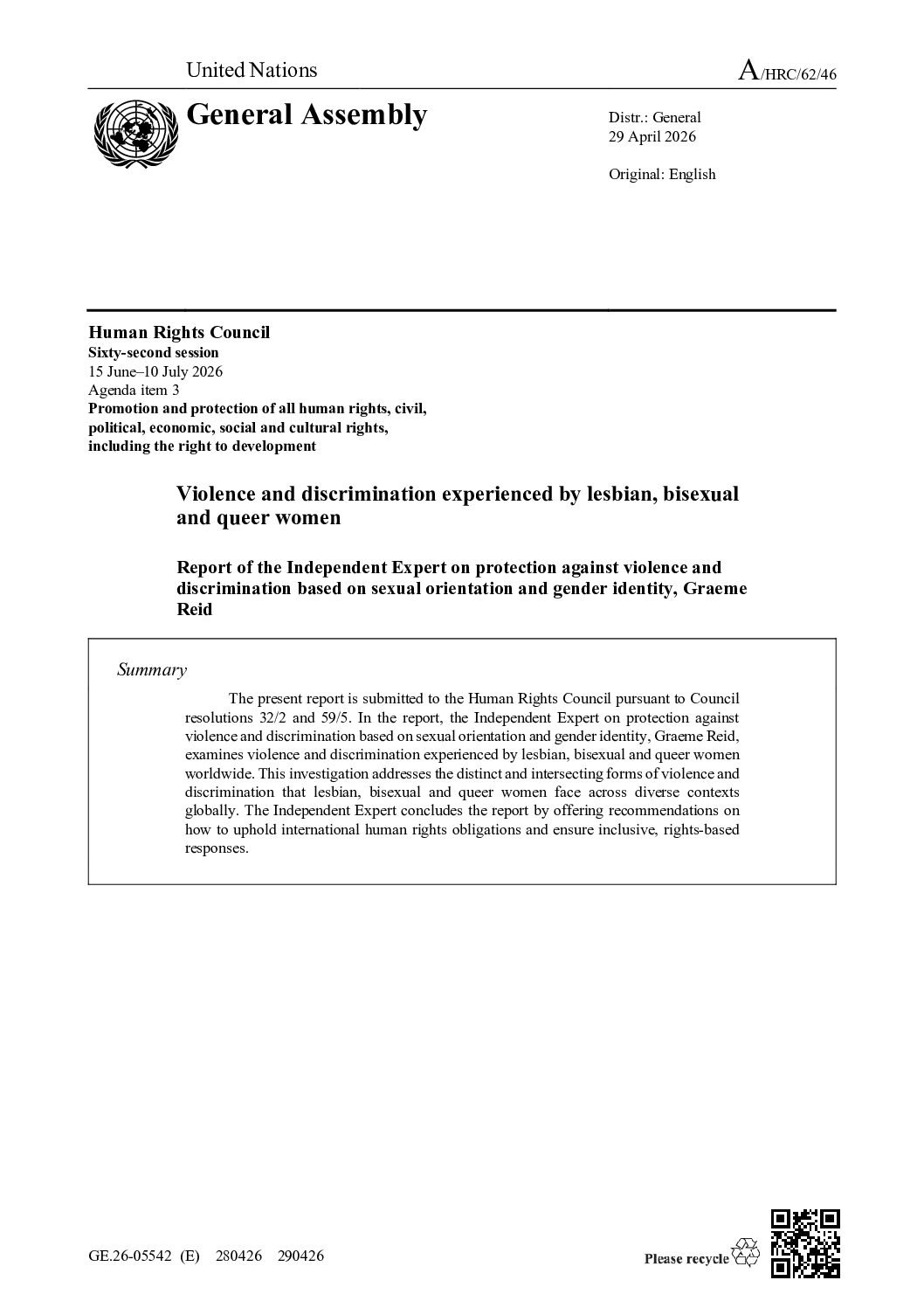
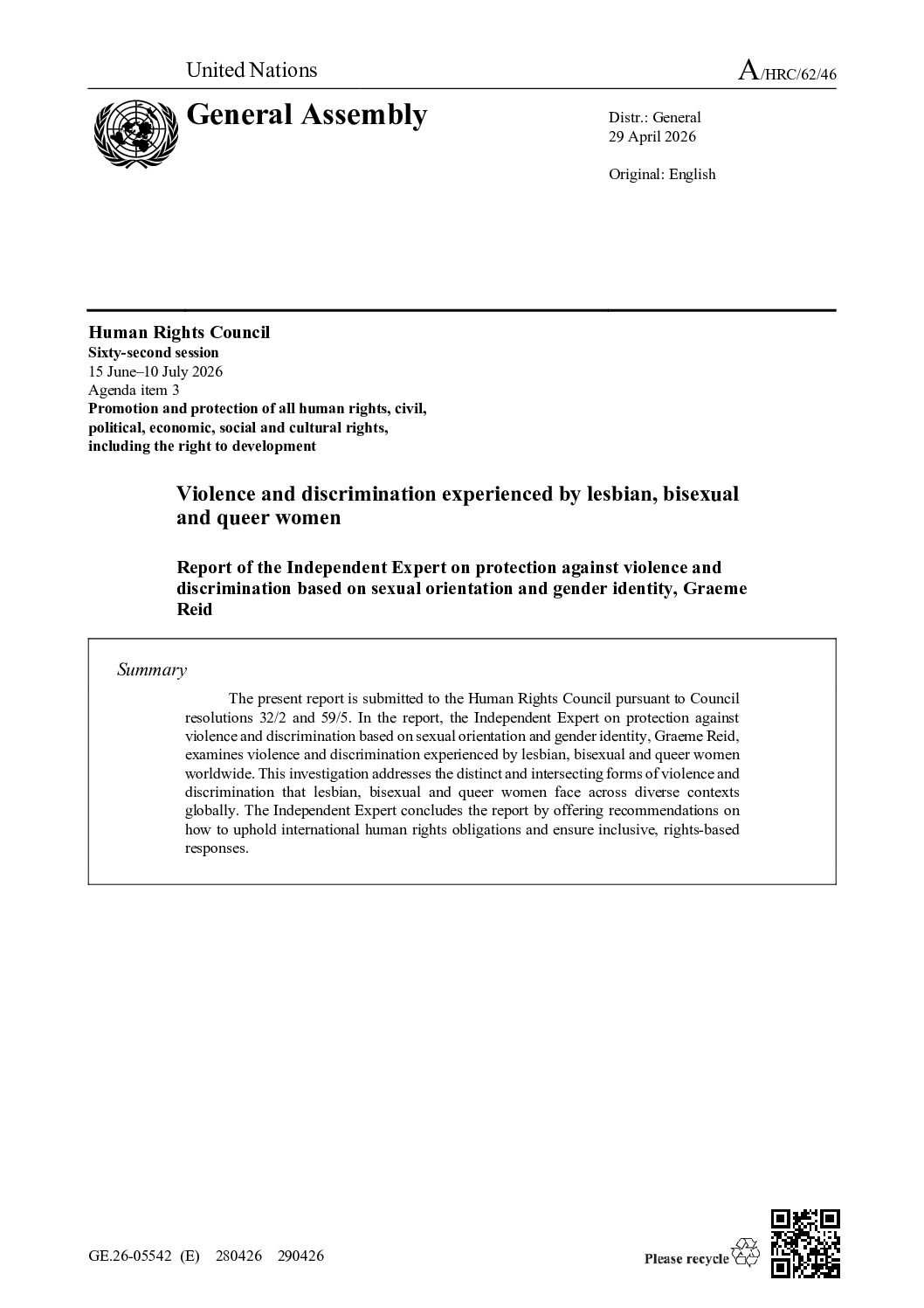
    The present report is submitted to the Human Rights Council pursuant to Council resolutions 32/2 and 59/5. In the report, the Independent Expert on protection against violence and discrimination based on sexual orientation and gender identity, Graeme Reid, examines violence and discrimination experienced by lesbian, bisexual and queer women worldwide. This investigation addresses the distinct and intersecting forms of violence and discrimination that lesbian, bisexual and queer women face across diverse contexts globally. The Independent Expert concludes the report by offering recommendations on how to uphold international human rights obligations and ensure inclusive, rights-based responses. 

  • Policy Paper: The Position and Socio-Economic Inclusion of LGBTIQ+ Persons in the Labor Market in Montenegro

    Policy Paper: The Position and Socio-Economic Inclusion of LGBTIQ+ Persons in the Labor Market in Montenegro

    This policy paper explores the socio-economic position of LGBTQI+ people in Montenegro, focusing on employment, workplace discrimination, access to protection, and the implementation of labour and equality legislation.

    It presents key findings from the national context and provides practical recommendations for institutions, employers, civil society organisations, trade unions, and other stakeholders working to advance equality and create safer and more inclusive workplaces.

    This publication was produced within the framework of the project Working Safe: Socio-economic Inclusion of the LGBTQI+ Community in the Western Balkans and Türkiye, which is implemented by ERA – LGBTI Equal Rights Association for Western Balkans and Türkiye, in partnership with Queer Montenegro, Tuzla Open Center from BiH, Open Mind Spectrum Albania, Center for Social Group Development from Kosovo, Coalition Margins from North Macedonia, Izađi from Serbia and Kaos GL from Türkiye. This project is funded by the European Union.

    This material was produced with the assistance of ERA and the European Union. Its contents are the sole responsibility of the author(s) and the implementing organisation and do not necessarily reflect the views of ERA or the European Union. 

  • ERA Joins Grant Agreement Signing Ceremony and Capacity Building in Podgorica

    ERA Joins Grant Agreement Signing Ceremony and Capacity Building in Podgorica

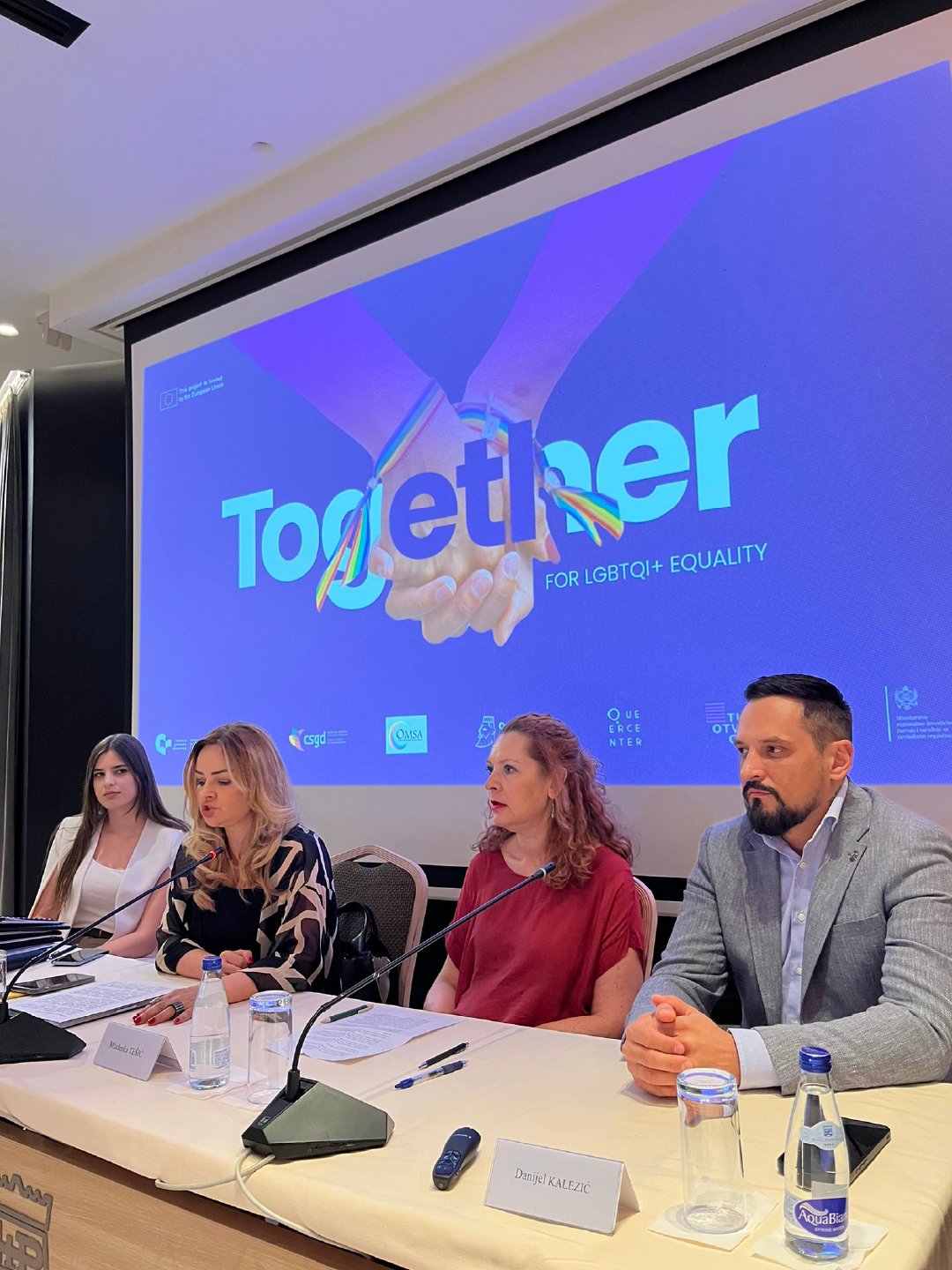
    ERA joined partners, subgrantees and organisations from across the region in Podgorica for the Grant Agreement Signing Ceremony and Capacity Building for Management and Advocacy, organised within the programme Together for LGBTQI+ Equality.

    The event brought together project partners and supported organisations from Bosnia and Herzegovina, Montenegro, North Macedonia, Serbia and Kosovo, marking an important step in strengthening locally driven initiatives, regional cooperation and the long-term sustainability of the LGBTIQ+ movement.

    Danijel Kalezić, ERA’s Executive Co-Director, delivered opening remarks and joined Daliborka Uljarević, Executive Director of the Centre for Civic Education, and Mladenka Tešić, Programme Manager at the Delegation of the European Union to Montenegro, at the official grant agreement signing ceremony.

    Grant agreements were signed with 19 organisations from the region, with total support amounting to EUR 306,645.41. The supported initiatives address the needs of LGBTIQ+ communities through legal support, visibility, youth work, research, advocacy and public policy development.

    As part of the programme activities, project partners also held a coordination meeting to review implementation and discuss next steps. ERA was represented by Danijel Kalezić and Elena Petrovska, Project Coordinator.

    During the capacity building, representatives of supported organisations strengthened their skills in project management, reporting, EU visibility, procurement, VAT regulations and advocacy. The training also provided space for organisations to exchange experiences, share challenges and build stronger regional connections.

    As a project partner, ERA is proud to contribute to a programme that supports community-based work, strengthens organisational capacities and creates more space for coordinated action toward equality.

    The programme Together for LGBTQI+ Equality is implemented by the Centre for Civic Education in partnership with ERA – LGBTI Equal Rights Association for Western Balkans and Türkiye, Queer Montenegro, Queer Center, Tuzla Open Center, Open Mind Spectrum Albania and the Center for Social Group Development from Kosovo.

    The programme is funded by the European Union and co-funded by the Ministry of Human and Minority Rights of Montenegro.

  • ERA, Stana and Queer Montenegro Address Violence Against LBTIQ Women at Joint Event in Podgorica

    ERA, Stana and Queer Montenegro Address Violence Against LBTIQ Women at Joint Event in Podgorica

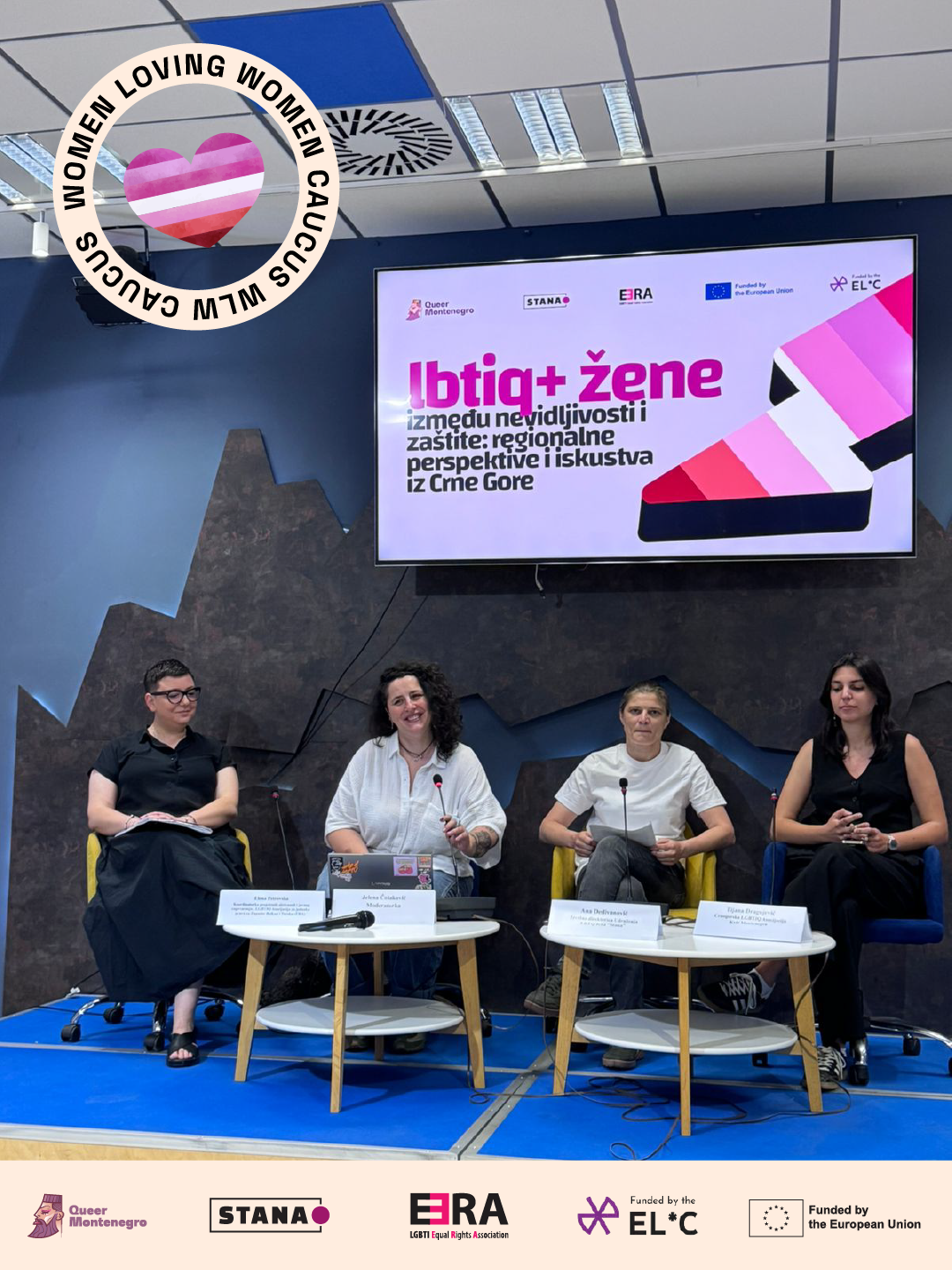
    The conference “LBTIQ Women between Invisibility and Protection: Regional Perspectives and Experiences from Montenegro” opened in Podgorica, bringing together community representatives, civil society organisations and key stakeholders to discuss violence against LBTIQ women, institutional mistrust and the urgent need for real, accessible and non-discriminatory protection.

    The event was opened by Ana Dedivanović, Executive Director of the LBTQ Women’s Association Stana, and Tijana Dragojević, Project Coordinator at Queer Montenegro. In their opening remarks, they centred the realities of LBTIQ women who have remained invisible for too long, while continuing to exist, love, build community and resist.

    Jelena Čolaković presented the local research findings, showing that violence against LBTIQ women is often not limited to isolated incidents, but forms a continuum. This includes psychological pressure, verbal abuse, family rejection, threats of outing, digital harassment, control within relationships and mistrust in institutions.

    One of the key findings presented during the conference was particularly clear: although 64% of respondents know where they could report violence, 80% have never reported it. This gap points to the need to move beyond the formal availability of protection mechanisms and ensure that institutions are trusted, accessible and able to respond without discrimination.

    Bringing the regional perspective, Elena Petrovska, Project and Advocacy Coordinator at ERA and WLW Caucus Coordinator, underlined the importance of moving from research and data towards concrete protection.

    “This dialogue is an important step from data to protection. We are here to work closely with institutions, policy makers and local organisations so that laws, services and referral pathways recognise LBTIQ survivors and protect them without discrimination. We now have solid evidence about how violence affects LBTIQ women across the region. What we need is cooperation so that these realities are recognised in policies, protocols and services,” said Petrovska.

    The conference created space for a public dialogue on how institutions, civil society organisations and decision-makers can better recognise the specific forms of violence experienced by LBTIQ women and ensure that protection systems respond to their needs in practice.

    This activity was part of the projects “Invisible Survivors,” “We Exist, We Resist,” and “From Data to Protection – Improving Cooperation among Key Actors in the Field of Gender-Based Violence against LBQ Women in the Western Balkans,” funded by the EuroCentralAsian Lesbian* Community network and the European Union.

    The content is the sole responsibility of the LBTQ Women’s Association Stana, LGBTIQ Association Queer Montenegro, and ERA – LGBTI Equal Rights Association for the Western Balkans and Türkiye, which implement the projects, and does not necessarily reflect the views of donors.

  • Call for Proposals

    We open the Call for Proposals for the support to projects of civil society organisations (CSO) in Western Balkans and Türkiye

    Project proposals should promote and support the social inclusion and fundamental rights of LGBTQI+ persons in all spheres of public and private life. The objective of this call is to support local initiatives that advance equality and empower LGBTQI+ communities, by strengthening the role and capacities of LGBTQI+-led civil society.

    The overall aim is to contribute to further socio-economic inclusion of the LGBTQI+ community and participation in the public sphere in the Western Balkans and Türkiye. The objective is to strengthen the civil society organizations’ role and capacities to advocate, deliver services, raise public awareness and/or provide other types of support to the LGBTQI+ population in pursuing their rights and equal opportunities.

    Project proposal shall be submitted no later than 2 November 2025, 17:00 (CET).

    In order to be eligible for a grant, the lead applicant must fulfil criteria as follows:
    • Be a legal person;
    • Be non-profit-making;
    • Be a civil society organisation (CSO) or a representative network of CSOs working on
    one or more thematic areas of relevance to this Call for Proposals

    • be established in an IPA III Beneficiary under the Instrument of Pre-accession Assistance – the IPA III Beneficiaries taken into consideration for the present call for proposals are: The Republic of Albania, Bosnia and Herzegovina, Kosovo, Montenegro, The Republic of North Macedonia, The Republic of Serbia, The Republic of Türkiye
    • be directly responsible for the preparation and management of the action with their possible co-applicant(s) and affiliated entity(ies), not acting as an intermediary and
    • have as a minimum two years (i.e. 24 months) experience in the field of the Call. In case the lead applicant is a network of CSOs, this applies also to its members and

    Applications must be submitted with filled: Application Form (Annex I) Budget Proposals (Annex II) and Logical Framework Matrix (Annex III).

    Please read carefully detailed Guidelines prior to filling in these forms.

    A comprehensive capacity-building programme in project management and related issues will be provided to supported CSOs.

    Applications, along with the accompanying technical documentation, shall be sent to e-mail grants@old.lgbti-era.org, with subject “CfP for CSOs in WB and TR – Working Safe”. If needed, further information can be obtained by sending the question to grants@old.lgbti-era.org no later than 12 October 2025 17:00.

    A total of EUR 400,000 will be allocated to CSOs through this call. The amount of funds that can be allocated for an individual project under this Call can be a maximum of EUR 40,000.

    The project Working Safe: Socio-economic Inclusion of the LGBTQI+ Community in the Western Balkans and Türkiye, which is implemented by ERA – LGBTI Equal Rights Association for Western Balkans and Türkiye, in partnership with Queer Montenegro, Tuzla Open Center from BiH, Open Mind Spectrum Albania, Center for Social Group Development from Kosovo, Coalition Margins from North Macedonia, Izađi from Serbia and Kaos GL from Türkiye. This project is funded by the European Union.

    This call was produced with the assistance of the European Union. Its contents are the sole responsibility of the implementing organisation and do not necessarily reflect the views of the European Union.